
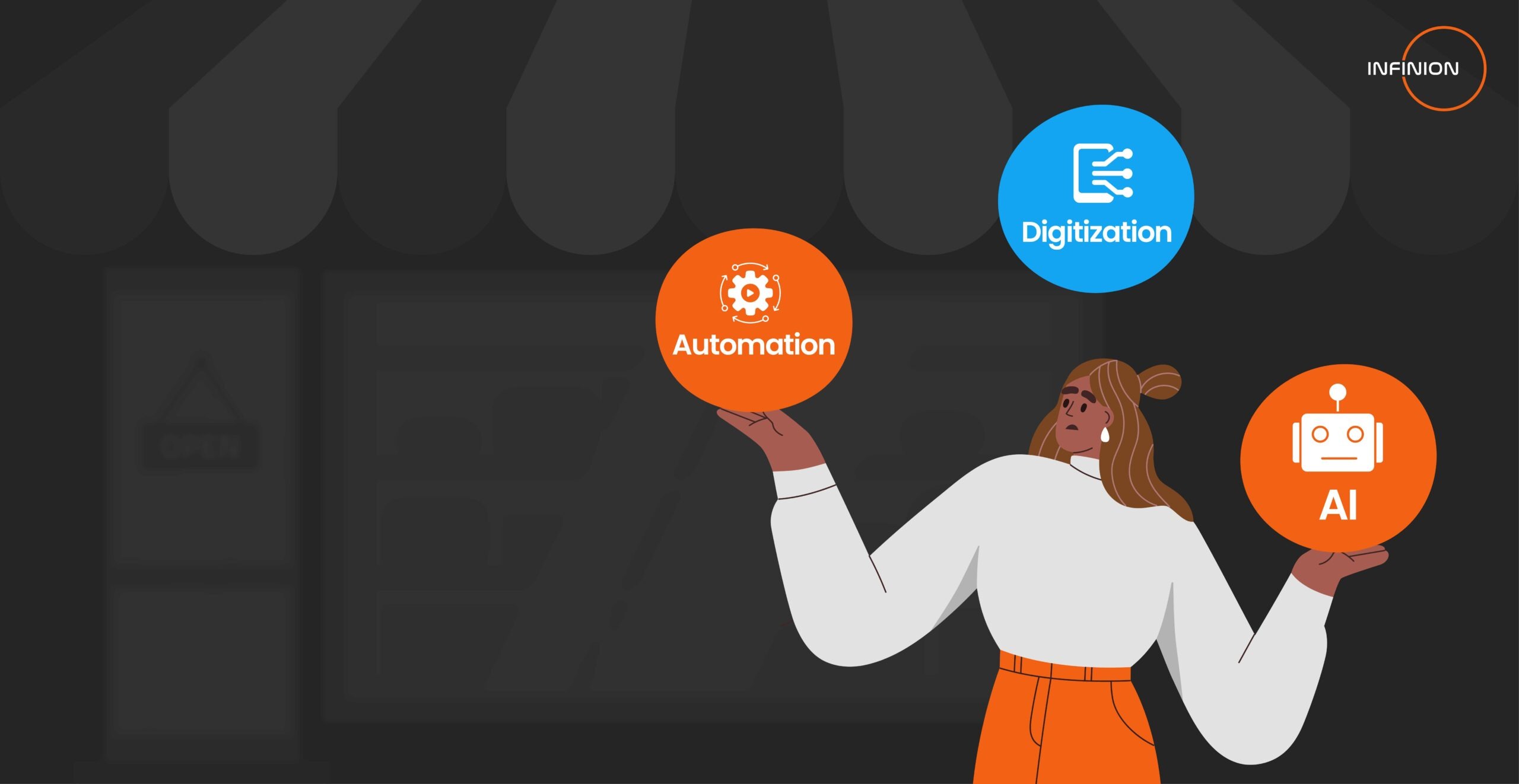
Walk into almost any executive boardroom today, and you will hear three buzzwords tossed around as if they mean the exact same thing: digitization, automation, and artificial intelligence.
They do not.
When business leaders treat these technologies as interchangeable, expensive mistakes happen. Companies buy complex AI tools when they really just need basic automation. Others try to automate workflows while their core data is still trapped on paper. The result is always the same: high software bills, frustrated teams, and activity without productivity.
From an operational viewpoint, understanding the difference between these three technologies is not just a job for your IT department. It is a strategic leadership skill. Think of building a modern business like manufacturing a high-performance vehicle. Before you install a self-driving computer, you first need a solid chassis and a reliable engine.
Here is how digitization, automation, and AI actually work, how they differ, and which one your business needs right now.
1. Digitization: Building the Chassis
Digitization is the foundation. Technically, it is the process of converting physical, analog information such as paper forms, printed invoices, and physical signatures, into digital formats that a computer can store and read.
It is the simplest step, yet many organizations skip it. You cannot analyze data that lives in a metal filing cabinet. Digitization moves your information from paper to the cloud, making it searchable, shareable, and secure.
Operations Use Case: Document Management and Approvals. Instead of printing contracts, walking them down the hall for wet-ink signatures, and storing them in folders, your team uses digital document management systems and e-signatures.
A mid-sized logistics company we worked with was losing up to three days on every vendor onboarding cycle because compliance forms were printed, couriered between branches, and manually filed. By digitizing their document archive and approval workflows into a centralized cloud system, they cut search times from hours to seconds and eliminated physical storage costs. They did not need AI. They just needed their data off paper.
2. Automation: Adding the Engine
Once your information is digital, you can put it to work. Automation uses software to execute repetitive, rule-based tasks without human intervention.
Technically, traditional automation often called Robotic Process Automation (RPA) operates on strict “if-this-then-that” logic. It does not think, learn, or guess. It simply follows a precise set of instructions faster and more accurately than a human ever could. Think of it like cruise control on a highway: you set the speed, and the car maintains it until you hit the brakes.
For instance, in expense reconciliation and data entry. When an employee submits a digital expense claim, an automated workflow checks the amount against company policy, routes it to the right manager for approval, and updates the accounting ledger once approved.
One regional financial services firm had a four-person team spending twelve hours every week copying transaction numbers from digital bank statements into their Enterprise Resource Planning (ERP) software. We deployed an intentional RPA workflow to extract the figures and populate the ledger automatically. Data entry errors dropped to zero, and those four analysts gained forty-eight hours a month to focus on other productive tasks.
3. Artificial Intelligence: Installing the Self-Driving System
If automation is cruise control, Artificial Intelligence is a fully autonomous vehicle. Technically, AI refers to computer systems using technologies like Machine Learning and Natural Language Processing that can analyze massive amounts of data, recognize complex patterns, make predictions, and adapt to new situations without being explicitly programmed for every scenario.
Automation follows rigid rules; AI handles gray areas then gets smarter over time as it processes more information.
Operations Use Case: Predictive Maintenance, Talent Screening, and Intelligent Support. AI can read thousands of incoming resumes to rank the best candidates based on context rather than just keywords, or analyze customer service tickets to predict churn before a client cancels.
Another example is with a fast-growing retail enterprise struggling with frequent stockouts on high-demand items while over-ordering slow-moving inventory. Traditional automation could reorder stock when levels hit a fixed number, but it could not account for seasonal shifts, local holidays, or sudden market trends. By integrating an AI predictive analytics model into their supply chain, the company analyzed three years of historical sales alongside real-time market data. Overstock waste fell by 22 percent within two quarters, and customer satisfaction climbed because popular products stayed on the shelves.
Which One Is Best for You?
Choosing the right technology is not about chasing the latest trend. It is about matching the tool to your operational maturity.
- Start with Digitization if your critical business records, approvals, and customer files still rely on paper, physical signatures, or disconnected spreadsheets.
- Invest in Automation if your data is already digital, but your talented staff are wasting hours moving information between apps, sending routine emails, or processing predictable requests.
- Deploy AI when your core workflows are already digitized and automated, and you need to make faster decisions, forecast outcomes, or personalize experiences at scale.
The Bottom Line for Leaders
Technology should never replace the human element of your business; it should amplify it. People matter just as much as the systems they use. When you clear away paper bottlenecks with digitization, eliminate robotic busywork with automation, and sharpen decision-making with AI, you free your team to do what humans do best: innovate, build relationships, and lead.
At INFINION, we help organizations cut through the tech hype to build focused, scalable systems that deliver measurable returns. Whether you are taking your first step off paper or deploying enterprise-grade AI agents, the smartest move is always the one that solves your actual business bottleneck today